

Hey there! As a supplier of CPAP blower motors, I often get asked about the maximum pressure these motors can reach. It's a crucial question, especially for those in the medical field who rely on CPAP (Continuous Positive Airway Pressure) devices to help patients with sleep apnea and other respiratory issues. So, let's dive right in and explore this topic.
Understanding CPAP Blower Motors
First off, let's talk a bit about what CPAP blower motors are and how they work. These motors are the heart of CPAP machines. They're responsible for generating the airflow and pressure needed to keep a patient's airway open during sleep. When a person has sleep apnea, their airway collapses during sleep, causing pauses in breathing. The CPAP machine blows air into the airway at a constant pressure, preventing it from collapsing.
The pressure generated by a CPAP blower motor is measured in centimeters of water pressure (cmH₂O). This unit might seem a bit strange, but it's a standard way to measure the pressure in respiratory devices. The higher the cmH₂O value, the more pressure the motor can generate.
Factors Affecting Maximum Pressure
There are several factors that can affect the maximum pressure a CPAP blower motor can reach. Let's take a look at some of the most important ones.
Motor Design
The design of the motor plays a huge role in determining its maximum pressure. Motors with more powerful magnets and better windings can generally generate higher pressures. For example, a motor with a high - torque design can spin the impeller faster, which in turn can create more pressure. Some of our Ventilator Centrifugal Blower models are designed with advanced motor technology to achieve higher pressures.
Impeller Size and Shape
The impeller is the part of the motor that actually moves the air. A larger impeller can move more air, but it also requires more power to spin. The shape of the impeller is also important. Impellers with curved blades are often more efficient at generating pressure than those with straight blades. Our High Pressure Dc Blower models feature carefully designed impellers to optimize pressure generation.
Airflow Resistance
The amount of resistance in the airflow path can also affect the maximum pressure. If there's a lot of resistance, such as a clogged air filter or a narrow airway tube, the motor will have to work harder to generate the same amount of pressure. That's why it's important to regularly clean and replace the air filters in CPAP machines.
Typical Maximum Pressure Ranges
So, what's the typical maximum pressure range for CPAP blower motors? Well, most standard CPAP machines can generate pressures between 4 and 20 cmH₂O. This range is suitable for most patients with mild to moderate sleep apnea. However, for patients with more severe cases, higher pressures may be required.
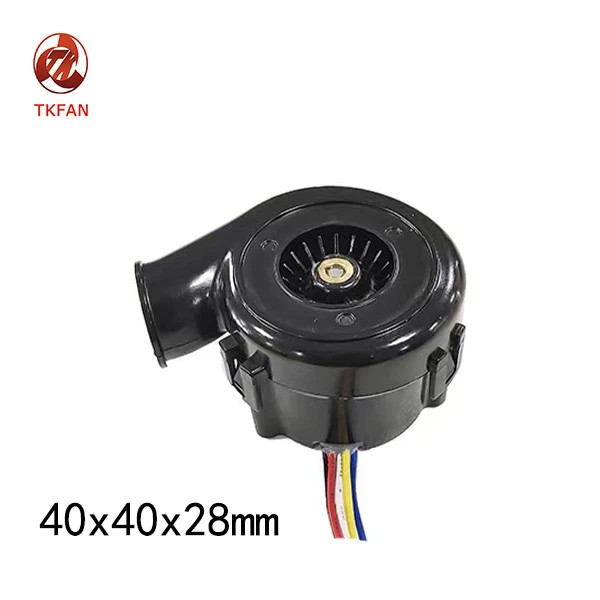
Some advanced CPAP machines can reach pressures of up to 25 or even 30 cmH₂O. These high - pressure machines are often used in hospitals or for patients with complex respiratory conditions. Our Medical Centrifugal Blower models are capable of achieving these higher pressure ranges, making them suitable for a wide range of medical applications.

Testing and Certification
Before a CPAP blower motor is released to the market, it has to go through a series of tests to ensure it can reach its advertised maximum pressure. These tests are usually conducted in a laboratory setting using specialized equipment.
In addition to pressure testing, the motors also have to meet certain safety and performance standards. For example, they need to be certified by organizations like the FDA (Food and Drug Administration) in the United States. This certification ensures that the motors are safe and effective for use in medical devices.
Choosing the Right Motor for Your Needs
When choosing a CPAP blower motor, it's important to consider the maximum pressure you need. If you're dealing with patients with mild sleep apnea, a motor with a lower maximum pressure may be sufficient. However, if you're working with more severe cases, you'll need a motor that can generate higher pressures.
You also need to consider other factors like noise level, power consumption, and reliability. Our company offers a wide range of CPAP blower motors to meet different needs. Whether you need a motor for a home - use CPAP machine or a high - performance medical device, we've got you covered.
Conclusion
In conclusion, the maximum pressure a CPAP blower motor can reach depends on several factors, including motor design, impeller size and shape, and airflow resistance. Most standard CPAP machines can generate pressures between 4 and 20 cmH₂O, while advanced machines can reach up to 25 or 30 cmH₂O.
If you're in the market for CPAP blower motors, we'd love to talk to you. We have a team of experts who can help you choose the right motor for your specific needs. Whether you're a medical device manufacturer or a distributor, we can provide you with high - quality motors at competitive prices. So, don't hesitate to get in touch with us for a quote or to discuss your requirements.
References
- "Respiratory Physiology: The Essentials" by John B. West
- "Medical Device Design and Development" by David G. Ullman